
Journalism
I have been searching
for exciting stories for
more than 25 years.
And my own story as
a radio journalist
is far from over.

Archive of my reports for Deutschlandfunk Kultur

Archive of my reports for Deutschlandfunk

Link to radioeins where
I worked for 15 years

Archive of my reports for Radio Canada
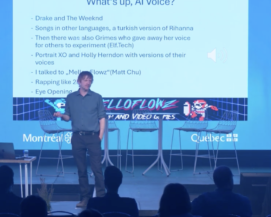
February 2025: My talk about making music and artificial intelligence for the Entertain-AI conference with the title: "Punks not dead but no longer alive!"

January 2023: Suno entered the space. It has never been so easy to write your own music. I predicted that it will be a game changer.
May 2023: Two Italians started “OperAI records“, the first label for music made with artificial intelligence. The word comes from Opera and AI.

February 2024: Ed Newton-Rex has launched “Fairly Trained”, a platform that certifies fair training data in generative AI.

February 2024: In the US state of Tennessee, the Senate passed the “Ensuring Likeness Voice and Image Security” Act, or ELVIS for short.

February 2025: Until a few years ago, it required a good ear and years of experience to transcribe notes, but now an AI can write them down.

May 2025: When we talk about AI, we often see how it can be used to steal ideas. But there are attempts to change this.
July 2025: Do we need to protect singing from disappearing? Like all other arts, it is currently facing a new challenge: artificial intelligence.
Music and Artificial Intelligence Journalism
Selected reports about AI
After many years reporting on new albums and concerts I started to cover artificial intelligence and its use in music in 2016. Since then I have become a specialist in that field and I have done countless reports. I also did the podcast "The Illiac Suite" about that subject. Swipe through some of my favourites in journalism.
Feature "Lieber Enno"
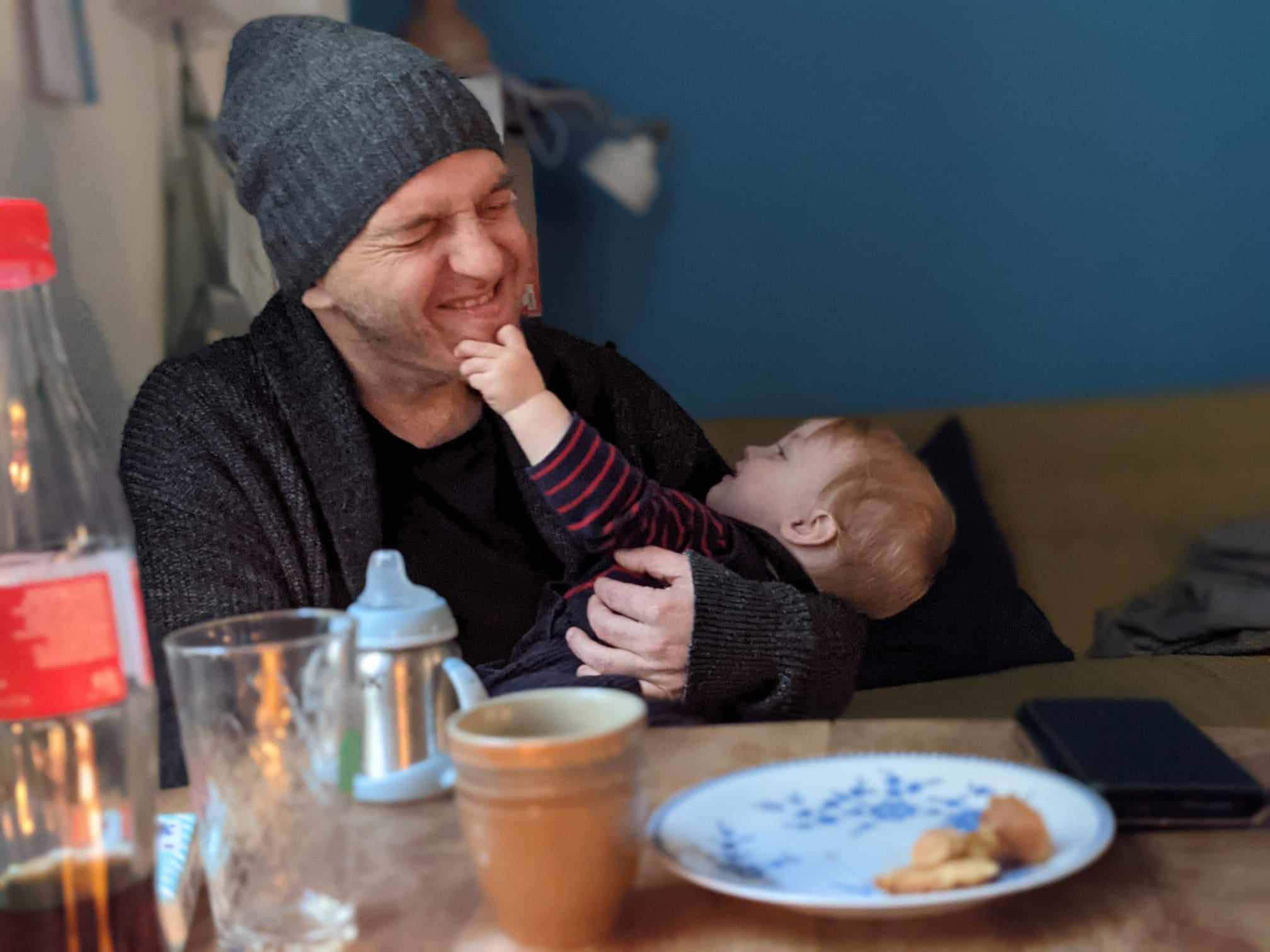
In autumn 2021, a good friend of mine told me that he had cancer. As a journalist, he asked me: "Could you record my life story for my one-year-old son? I want to tell him as much as about me as much as possible because I don't know how long I will live." I didn't have to think long before I agreed. I could feel how important this was for him. After that I made an appointment with him every month to talk to him. All the conversations were recorded. Unfortunately, he passed away six months later. Our recordings resulted in a one-hour feature entitled ‘Dear Enno’ ("Lieber Enno"), which was intended for his son and was broadcast by NDR (in German). You can listen to it here. This experience also gave rise to "Life Story Audio".
Latest works and reports in journalism (with links)
You might be familiar with this: You’re sitting on the subway on your way to work, have a few minutes to spare, check your phone, and scroll through short clips on social media. Until a few years ago, these were mostly short videos that existed independently of one another. But now a trend is slowly making its way over to us where every short minute, strung together, tells a story—and in portrait orientation: it’s called “Vertical Drama” or “MicroDrama.” This is already serving a huge and growing market in the U.S. and China. Now, the plan is to make it work in Germany as well.
The border between the U.S. and Canada is the longest border between two countries in the world. For decades, it wasn’t a major obstacle for musicians when it came to touring the other country. But that has changed since Trump took office: Uncertainty spread on both sides following his inauguration two years ago—new regulations, tariffs, and threats. As a result, tours were canceled or never planned in the first place.
With the help of artificial intelligence, it’s now possible to create videos so realistic that it’s hard to tell they’re AI-generated. What’s real, and what’s AI? Furthermore, there seem to be no limits to what’s possible anymore: action heroes from the ’80s suddenly stand side by side, joking around. Babies speak and act like adults. And yet, there was one task that AI systems struggled with for a long time: crowds. The classic 6- or 4-finger poses were a clue that the video was generated by AI. But that has changed since this summer: More and more videos are appearing of AI musicians performing in front of large audiences.
Artificial intelligence is here, but it has also been the subject of fierce criticism for years: Discussions range from excessive energy consumption and copyright infringements to job losses and even doomsday scenarios. For many, AI’s image isn’t particularly good. Nevertheless, it is used everywhere—in business, science, and even in the arts, where it is viewed with particular skepticism: People often say that music generated by a computer isn't “real” music. But how do those who are passionate about generating music with artificial intelligence actually respond to this criticism?
People who mainly use artificial intelligence to create music these days are usually not really appreciated by musicians who play instruments themselves. The comments are often dismissive: “That’s not real art,” “It’s all just stolen anyway,” and “We don’t even get paid for it.” Nevertheless, the community of people who enjoy making songs with the help of AI is growing steadily. In forums, members share ideas and listen to one another. After all, there's often a personal story behind a passion for AI music.
Music created with the help of artificial intelligence is now everywhere. It accompanies videos and floods social media and streaming services. However, the majority of radio stations (including us here at Deutschlandfunk Kultur???) still refuse to play it. A few private radio stations are the exception, though: especially at night, you can hear hours of AI music on them. But that’s only because it allows them to avoid the fees that are normally charged for songs registered with GEMA. So AI music is kind of in a gray area. Fans of AI music aren’t willing to accept that. That’s why there are more and more radio stations that play only AI music.
AI defines the sound
Melody's Echo Chamber album
"Emotional Eternal"
Patrick Watson's album
Robot project "Animachina" from Kroy
Album "Leftovers" from Le Ren